

Why Big MedTech Abandons Next-Gen Tools
When a multi-billion-dollar medical device behemoth wants to update a surgical tool, the journey from concept to clinic usually looks like a marathon through corporate red tape, market-risk committees, and years of siloed R&D. Thousands of promising medical patents and prototypes are quietly shelved, canned, or abandoned before they ever see the light of day, crushed by risk-averse boardrooms and engineers designing in isolation miles away.
But in a 7,000-square-foot collaborative suite on Vanderbilt’s campus, where a mock OR, rapid-prototyping machine shops with 3-D printers and laser cutters, and wet labs sit mere footsteps from active operating rooms, a nimble academic machine is proving that true innovation moves at the speed of proximity.
The Co-Design Engine
That structural agility means breakthrough tools bypass the corporate valley of death entirely because they are co-designed by close coalitions of engineers, surgeons, and educators working side-by-side.
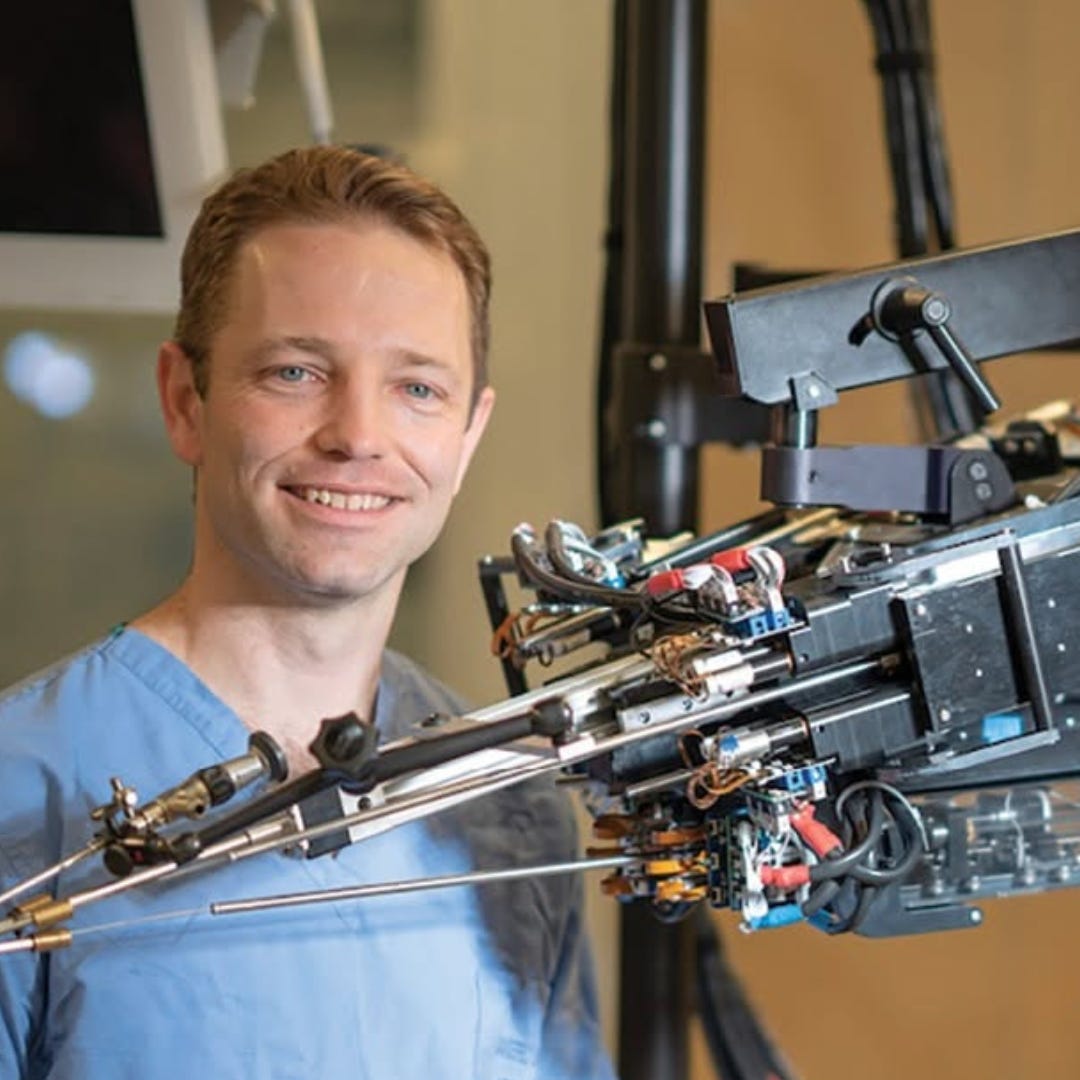
Take the magnetic colonoscope, born from a 15-year collaboration between Keith Obstein and Pietro Valdastri, running the STORM Lab USA and UK, backed by a 4-year, $1.2 million NIH grant. Instead of forcing a physician to physically push a rigid tethered scope through fragile, winding colons, a major hurdle for the 3 million Americans with IBD, an external robotic arm and permanent magnets gently pull a compliant, highly flexible scope forward. Using localization and autonomous control algorithms, it lets the clinician focus on finding lesions while eliminating physical pressure and reducing sedation risks.
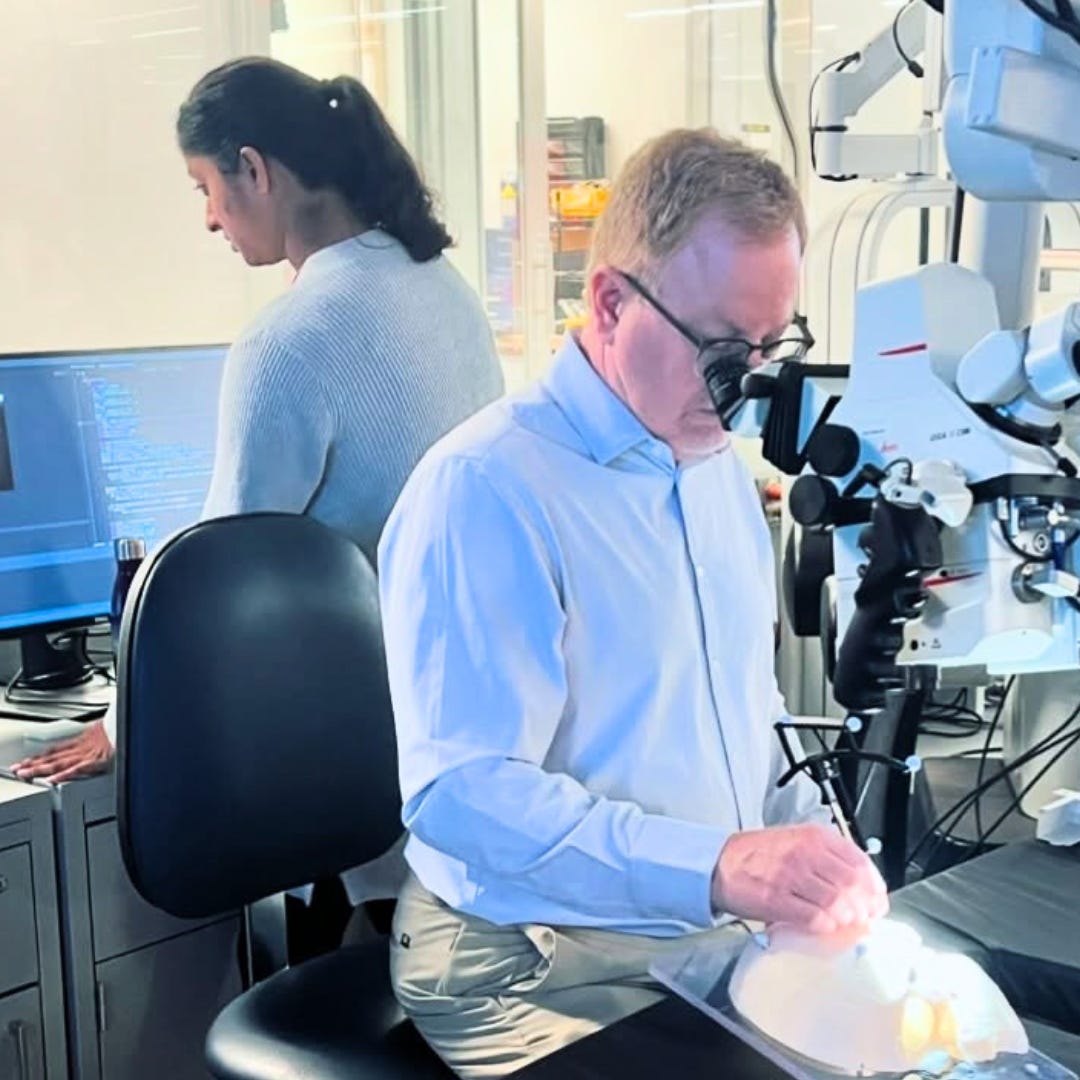
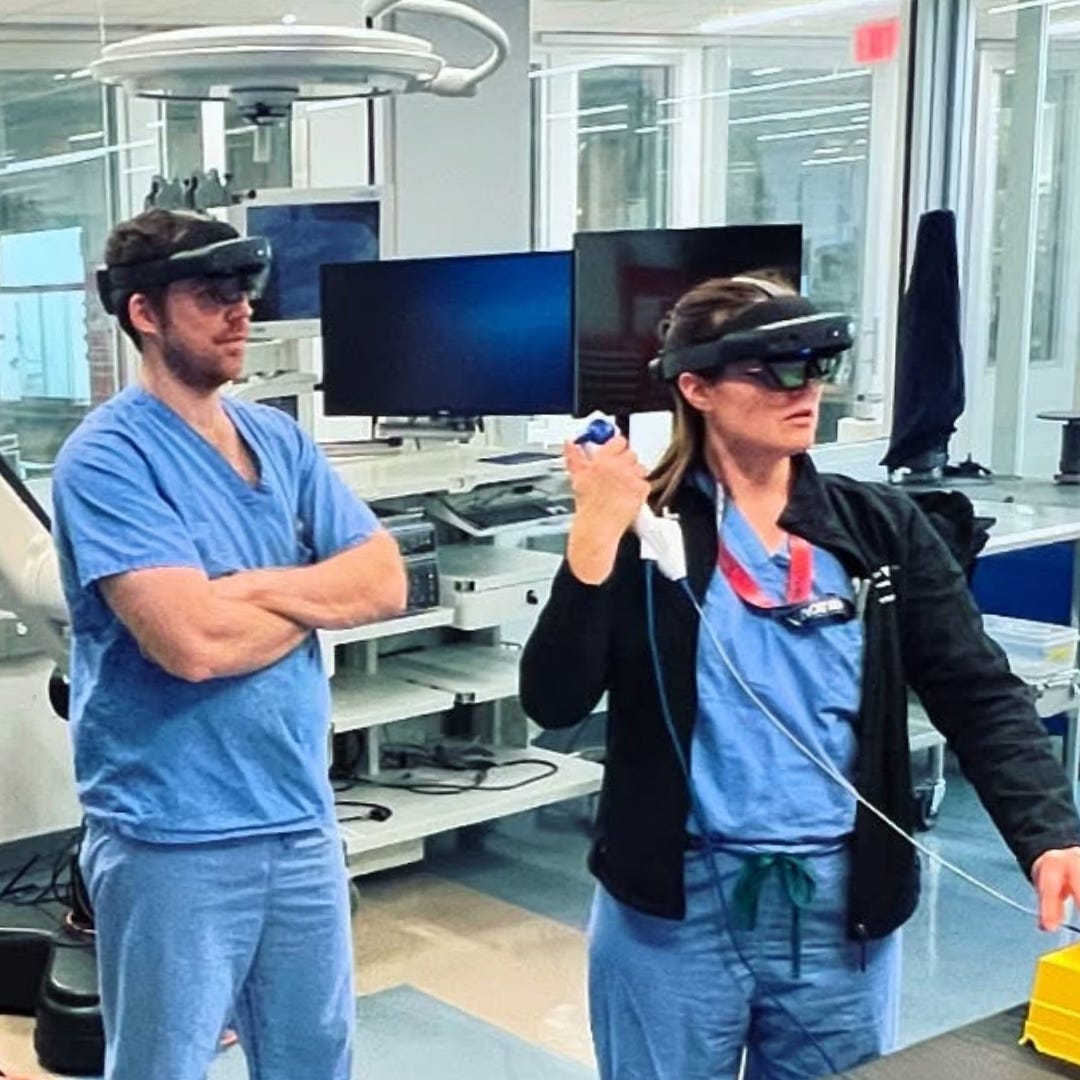
Similarly, in surgical oncology, otolaryngologist Michael Topf noticed a glaring gap: while 3D scanning is routine for dental crowns, it was missing from cancer surgery. Partnering with computer science assistant professor and primary investigator Jie Ying Wu, VISE Director Michael Miga, and anesthesiologist Matthew Weinger, the team secured a $2.5 million NIH grant for a head-mounted augmented reality system. This tech projects real-time 3D holographic overlays and heterogeneous tissue-shrinkage models directly onto the surgical field, replacing a surgeon’s fallible mental map of tumor margins with real-time holographic precision.
The Disruptor Next Door
What started informally before 2010 and officially launched as an institute in 2015 has grown into an operational powerhouse supported by over $30 million in active grants, 26 patents, 7 licenses, and dozens of completed PhDs.
As leaders like Seth Karp and Philippe Fauchet have long emphasized, having an incredibly compact campus where engineering and medicine are directly adjacent creates an unmatched advantage. While medical giants are weighed down by the sheer scale of manufacturing and risk mitigation, VISE operates on pure proximity.
The next great leap in surgical robotics and navigation isn’t being born in a corporate fortress; it is being forged right on the hospital floor, where the people writing the code stand shoulder-to-shoulder with the surgeons holding the scalpel.
Learn More & Resources
To dive deeper into the intersection of surgical engineering, magnetic robotics, and head-mounted augmented reality systems at Vanderbilt, explore the source coverage online:
Read the official announcement on the opening of the VISE collaborative suite through VUMC News.
Explore the details of the phase 1 clinical trial for the novel magnetic colonoscope via VUMC News.
Review the announcement regarding the NIH grant supporting head-mounted augmented reality for tumor resection on VUMC News.
References
Owens, A. M. D., & Clendening, J. Vanderbilt surgery, engineering collaborators create new home. VUMC News, December 19, 2018.
Clendening, J. VISE-affiliated researchers conduct phase 1 trial of novel magnetic endoscope for colonoscopies. VUMC News, October 17, 2023.
Dorian, E. Grant supports development of head-mounted augmented reality system to guide tumor resection. VUMC News, August 26, 2025.