

The End of the “Dark Ages” and the Breakthrough of Rod-Lens Physics
In the modern operating room, we take our high-definition monitors and precision keyhole instruments for granted. However, the visual tools used in today’s laparoscopic and endoscopic procedures exist because of the relentless tenacity of one man: Dr. George Berci. Reflecting on his passing in late 2024 at the age of 103, his journey stands as a testament to a fundamental truth in medicine: true progress occurs when clinicians refuse to accept the physical limitations of their era.
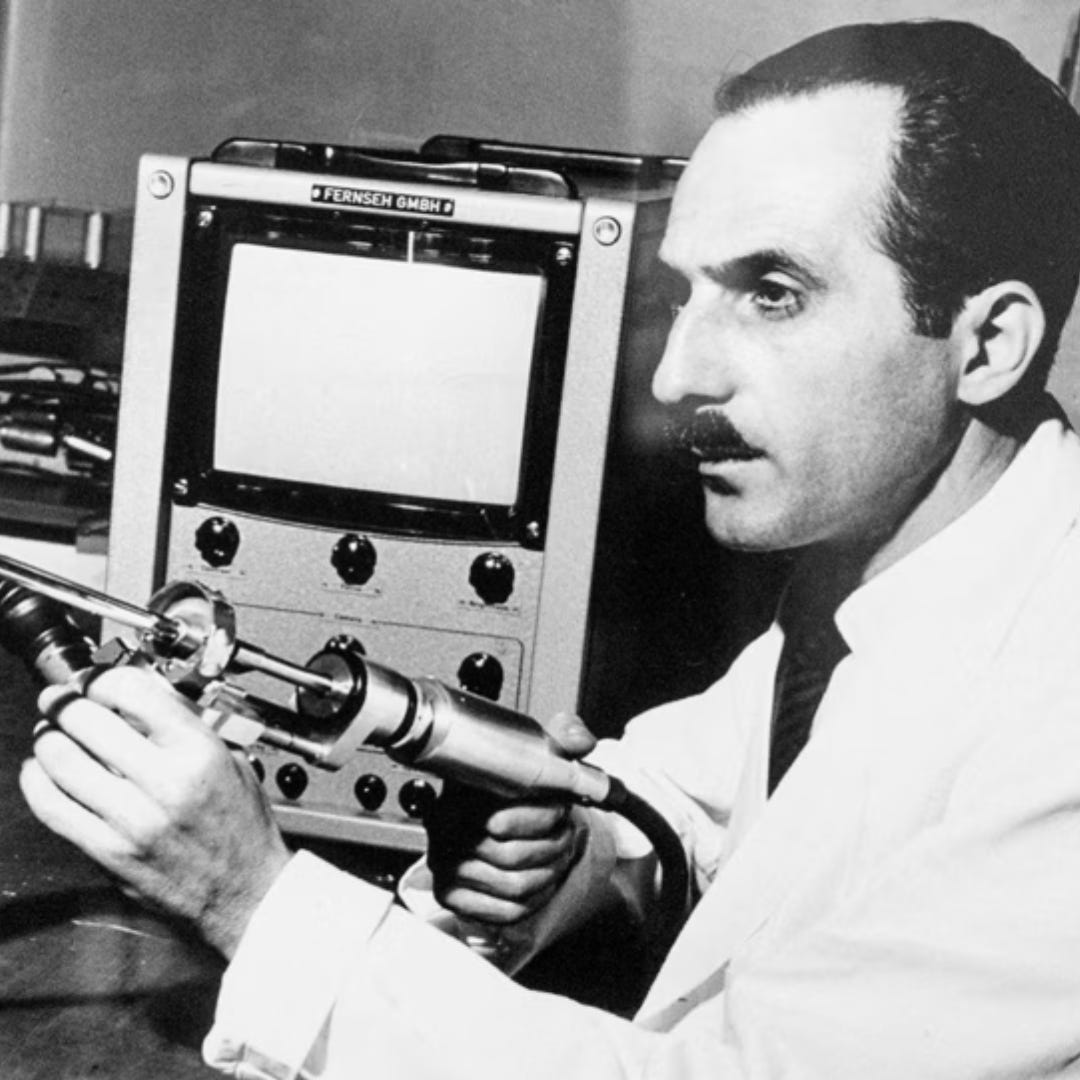
The 2013 SAGES documentary, George Berci: Trials, Triumphs, Innovations, makes one thing undeniable. The “dark ages” of surgery ended because Berci dared to bridge mechanical physics with clinical execution. Before his work, early endoscopes were dim, treacherous tubes that offered little more than a keyhole glimpse into dark, bleeding cavities. Dr. Berci’s defining technical contribution, perfecting the Hopkins Rod-Lens System alongside physicist Harold Hopkins, transformed endoscopic imaging from a dim curiosity into a high-resolution necessity. By replacing traditional air-spaced thin lenses with solid glass rods, Berci increased light transmission by a staggering ninefold while vastly improving structural clarity.
Bypassing Institutional Inertia and Commercial Hurdles
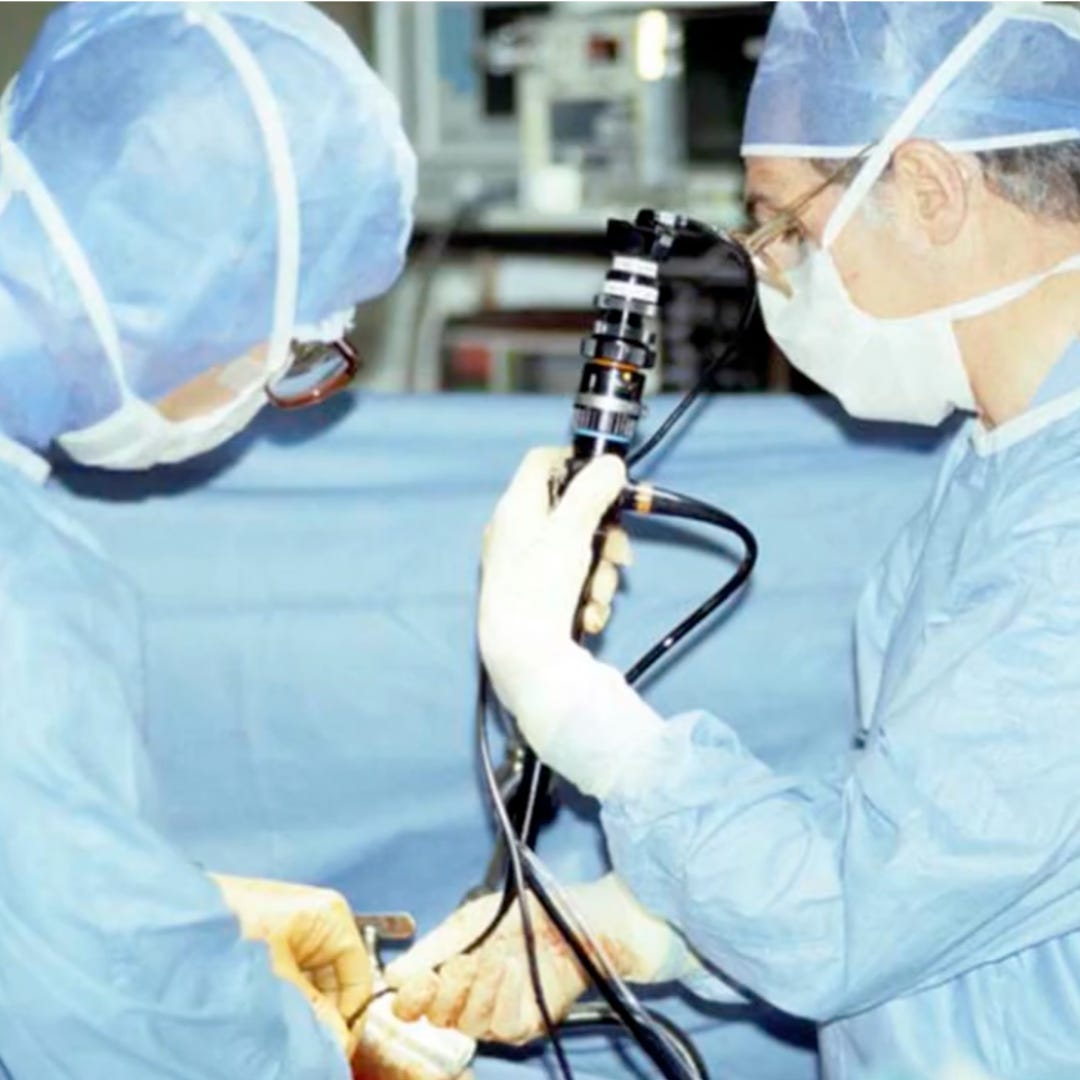
When Dr. Berci attempted to introduce early optical innovations and televised surgery to the medical community in the 1960s, he met widespread skepticism from surgeons who saw no need to look at a monitor instead of an open incision. If surgical vision is treated as a secondary luxury rather than a primary prerequisite for safety, technical progress stalls inside conservative institutional walls.
Berci bypassed this lack of engagement by becoming an active developer rather than a passive user. He personally designed early miniature television cameras and flexible light guides, effectively forcing the surgical community to recognize the power of shared, real-time visual fields. His persistence established the blueprint for modern operating rooms: proving that high-definition visualization is not an excessive institutional luxury, but an absolute baseline requirement for uncompromised patient safety.
Multidisciplinary Miniaturization and the Preserved Surgical Mind
Dr. Berci was a master of multidisciplinary miniaturization. According to a tribute from Cedars-Sinai, where he spent over half a century shaping modern practice, he paved the way for low-trauma surgery by designing fiber-optic lighting and micro-instrumentation that reduced patient pain and recovery times. He understood that improving visualization directly liberates the surgeon’s cognitive focus, turning blind manual probing into precise anatomical navigation.
Even into his 100s, Berci slept with a yellow notepad beside his bed to sketch new instrument designs, demonstrating a lifelong commitment to technical optimization. His work reminds us that the primary goal of surgical technology is not to showcase extravagant hardware, but to grant the clinician absolute visual clarity inside the human body.
Multidisciplinary Miniaturization and the Preserved Surgical Mind
Dr. Berci was a master of multidisciplinary miniaturization. According to a tribute from Cedars-Sinai, where he spent over half a century shaping modern practice, he paved the way for low-trauma surgery by designing fiber-optic lighting and micro-instrumentation that reduced patient pain and recovery times. He understood that improving visualization directly liberates the surgeon’s cognitive focus, turning blind manual probing into precise anatomical navigation.
Even into his 100s, Berci slept with a yellow notepad beside his bed to sketch new instrument designs, demonstrating a lifelong commitment to technical optimization. His work reminds us that the primary goal of surgical technology is not to showcase extravagant hardware, but to grant the clinician absolute visual clarity inside the human body.
Learn More & Resources
Watch the Documentary: See the technical evolution of the rod-lens system and Berci’s early experiments in the SAGES feature: George Berci: Trials, Triumphs, Innovations.
Read the Profile: Discover more about Dr. Berci’s daily routine and his refusal to retire at 101 in the LA Times: This 101-year-old surgical pioneer still works every day.
Explore the Tribute: Read the full account of his 50-year career and his impact on Cedars-Sinai: A Tribute: George Berci, MD, 1921-2024.
References
SAGES - Minimally Invasive Surgery Videos. George Berci: Trials, Triumphs, Innovations. [Documentary]. 2013.
Lopez S. This 101-year-old surgical pioneer still works every day. And he’s not about to retire. Los Angeles Times.March 13, 2022.
Cedars-Sinai Newsroom. A Tribute: George Berci, MD, 1921-2024. September 4, 2024.