

Shattering Analog Silos with a Global Blueprint
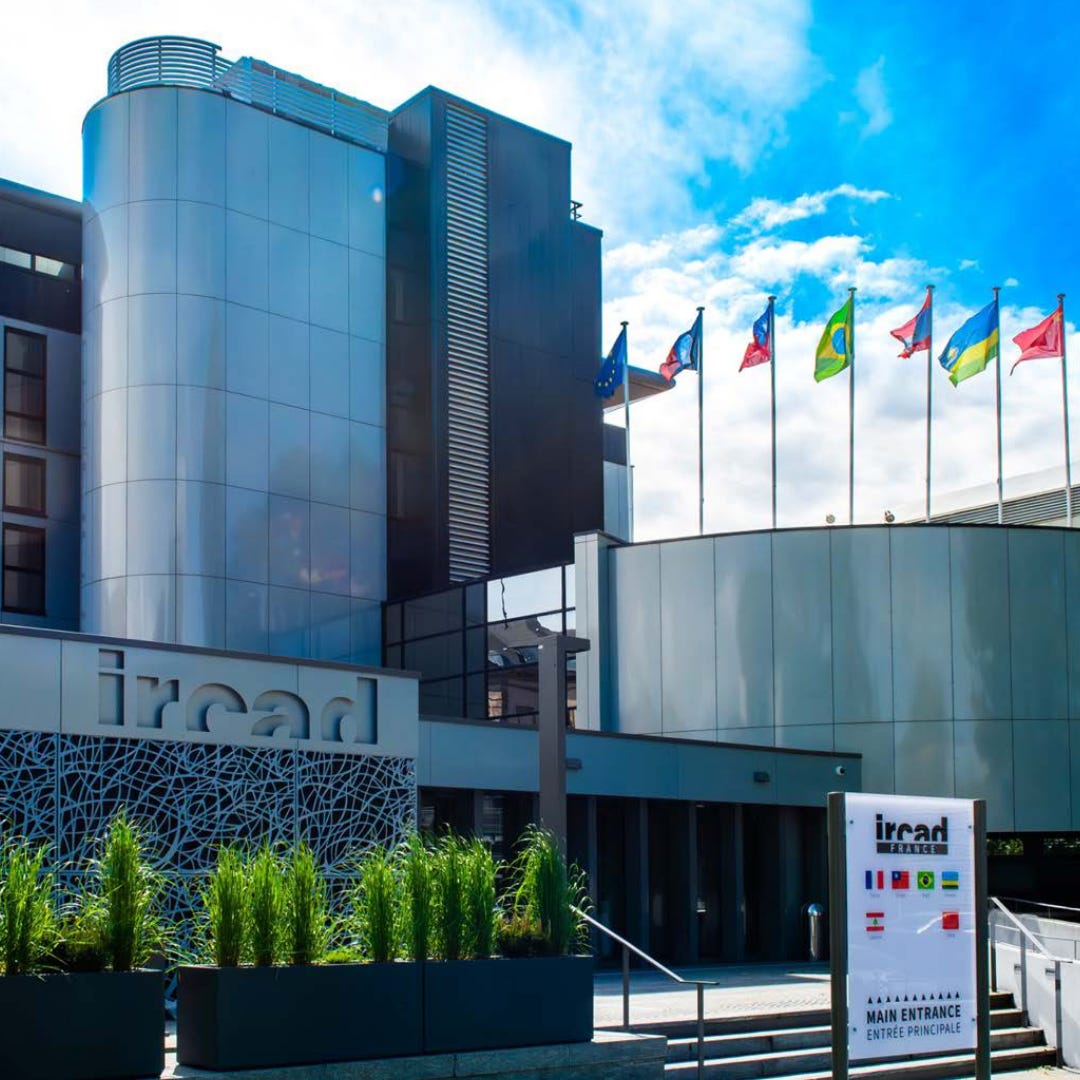
In July 1994, the world watched Brazil defeat Italy in a dramatic Rose Bowl final, proving that athletic brilliance requires a global stage. That exact same summer, in Strasbourg, France, Prof. Jacques Marescaux, Didier Mutter, and Michel Vix founded IRCAD to solve a matching problem in medicine. For over a century, surgical progress had been trapped in analog silos, from Alejandro Posadas filming early procedures in Buenos Aires to Kurt Semm facing institutional skepticism over keyhole surgery in Munich. The Strasbourg founders realized that modern digital surgery required a unified network where computer scientists, roboticists, and clinicians worked under one roof.
Thirty-two years later, that single institute has expanded into a global network of mirror centers spanning Brazil, Taiwan, India, Rwanda, and North America. At the heart of this expansion is the “excubator” model, designed to solve the crushing capital costs of modern robotics. Rather than locking proprietary software inside isolated corporate silos, IRCAD aggregates 42 distinct surgical robots across major manufacturers under one roof. This vendor-independent platform allows researchers to validate software across competing robotic architectures simultaneously before distributing refined tools to clinicians worldwide.
Why Borderless Collaboration Wins
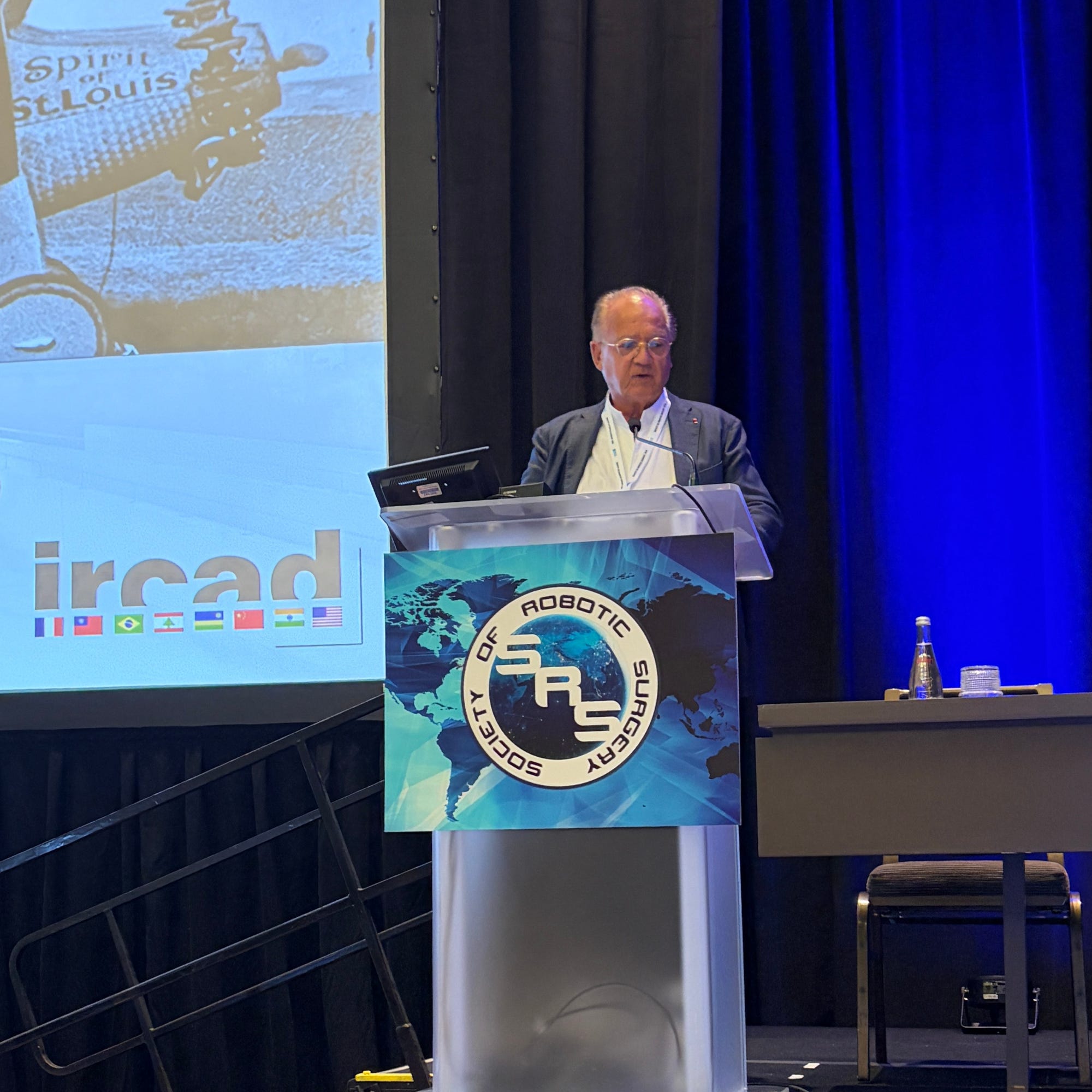
Addressing a packed hall at SRS 2026, Prof. Jacques Marescaux reinforced a message he has championed for decades: elite surgical breakthroughs cannot remain restricted by geography or institutional wealth. From executing the historic transatlantic Lindbergh Operation over dedicated fiber to establishing IRCAD Africa in Kigali, Marescaux has consistently proven that open research networks and cross-border policy are the only ways to accelerate global health outcomes. His presentation framed today’s connected network infrastructure not as an engineering miracle, but as the mandatory foundation for future surgical progress.
The ultimate expression of this borderless philosophy is the DISRUMPERE project, a joint initiative between IRCAD France and IRCAD Africa in Rwanda. The project tackles the persistent challenge of internal organ movement caused by patient breathing. By using artificial intelligence to reconstruct low-cost 2D ultrasound feeds into dynamic 3D vascular maps in real time, the system empowers a dual-armed robotic platform to autonomously track the target organ while micro-adjusting an ablation instrument to destroy deep liver or kidney tumors with millimeter accuracy. This allows non-experts in underserved regions to deliver interventions that once required specialized operators.
Democratizing Elite Expertise at the Bedside
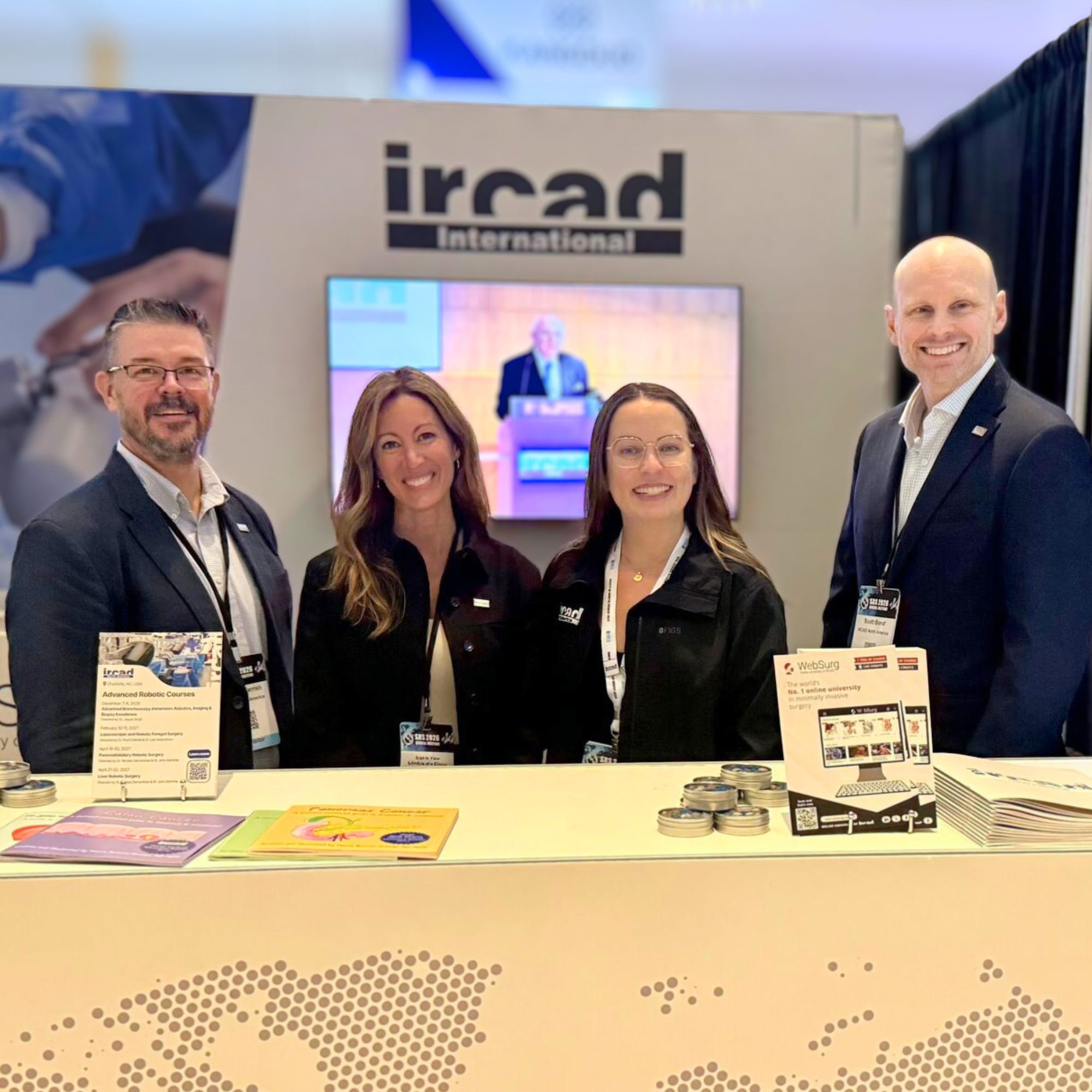
Inside IRCAD training labs across the globe, the real work of surgical democratization takes place every day. By pairing real-time spatial simulation with hands-on console experience across dozens of robotic systems, these facilities allow visiting surgeons to master complex minimally invasive techniques long before operating on patients. The model breaks down historical barriers, ensuring that a surgeon operating in a rural community hospital can access the exact same technical benchmarks and procedural fluency as a clinician at a major academic research center.
The lineage of innovation that crystallized in the summer of 1994 has proven that surgery can no longer exist in isolated, localized pockets. When we combine open-architecture software, flexible hardware platforms, and global training pipelines, we elevate the baseline of human health. The ultimate measure of progress in modern surgery is not how fast an elite facility can acquire a multi-million-dollar console, but how quickly we can put life-saving precision into the hands of surgical teams everywhere.
Learn More & Resources
To dive deeper into the historical evolution of modern surgical training, the rise of computer-assisted surgery, and the origins of the world’s most advanced robotic medical networks, explore these resources online:
Read the editorial update and retrospective on IRCAD’s three decades of continuous development, global mirror institutes, and clinical milestones through IRCAD France.
Explore how the landmark 1994 tournament in the United States served as a cultural catalyst that forever transformed the landscape of global soccer through the BBC Sport Interactive Special.
References
Marescaux, J. IRCAD: Continuous development to transform surgery worldwide. IRCAD Careers & News. published July 7, 2026.
Johnston, N. USA 94: The World Cup that ‘changed everything’. BBC Sport. published June 12, 2024.