

The Death of the Latency Debate and the Rise of Simulated Physics
For years, the medtech industry hid behind network lag as an excuse for slow adoption. Breaking the sub-50 millisecond latency threshold across 5G networks changed all of that. At sub-50ms, signal delay becomes completely imperceptible to human touch and vision, making a remote procedure across an ocean feel identical to standing in the same operating room. The hardware latency debate is dead. What matters now is how fast healthcare systems can adapt to software-driven surgical intelligence.
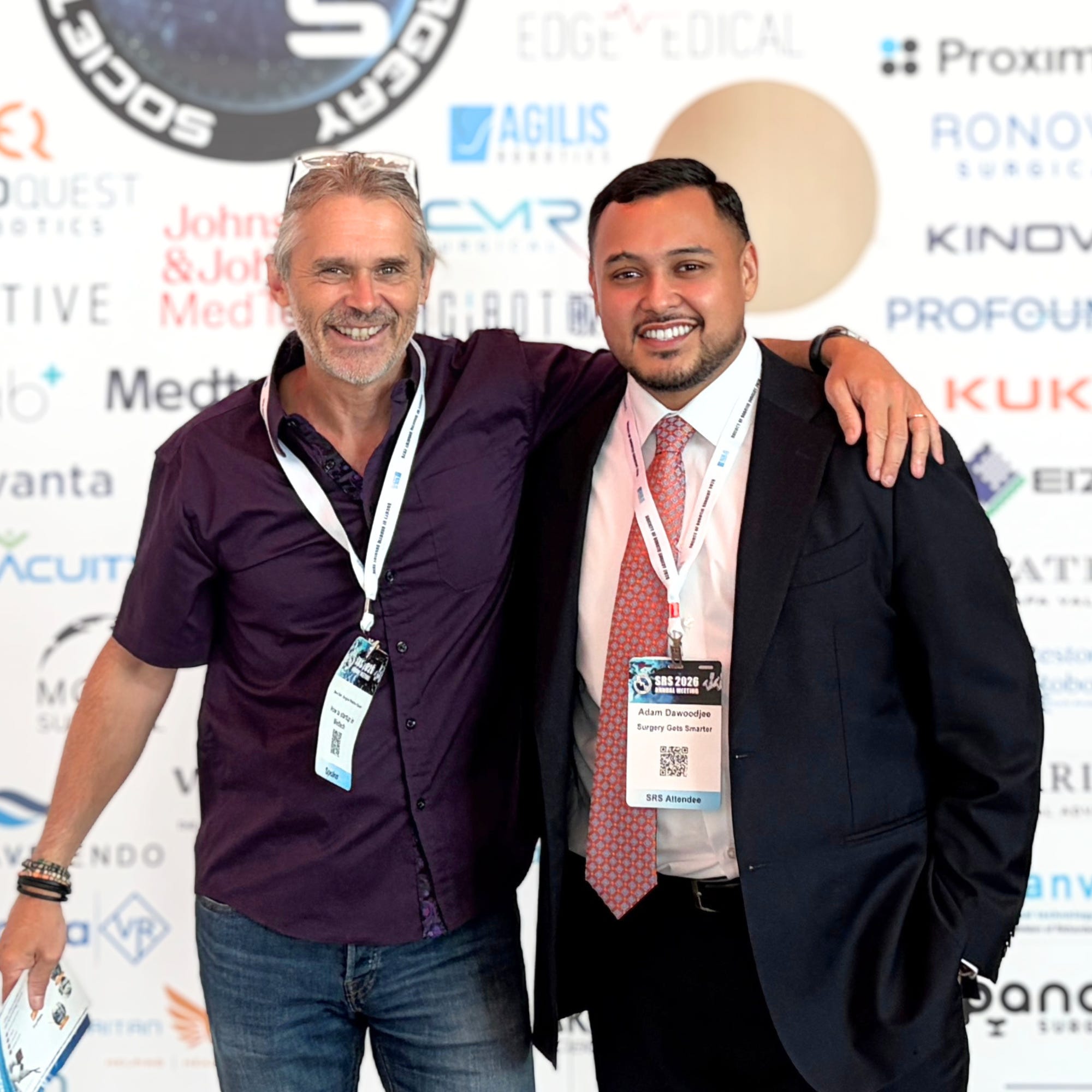
Watching medtech strategist Steve Bell unpack the tech stack alongside NVIDIA’s David Niewolny at SRS 2026, it became clear to me where the real revolution is happening. Niewolny detailed how NVIDIA is tackling the massive surgical “data gap” by open-sourcing its Isaac for Healthcare platform and new medical physics simulation framework. By moving beyond simple photorealism into true physics-based simulation, developers can simulate organ contact, instrument flex, and rare corner-case complications long before hardware touches a patient. This compresses years of physical testing into computational hours, shifting the entire industry away from brute-force mechanical engineering and into an era where virtual physics engines dictate operative success.
Overcoming the Regulatory Wall and Political Gridlock
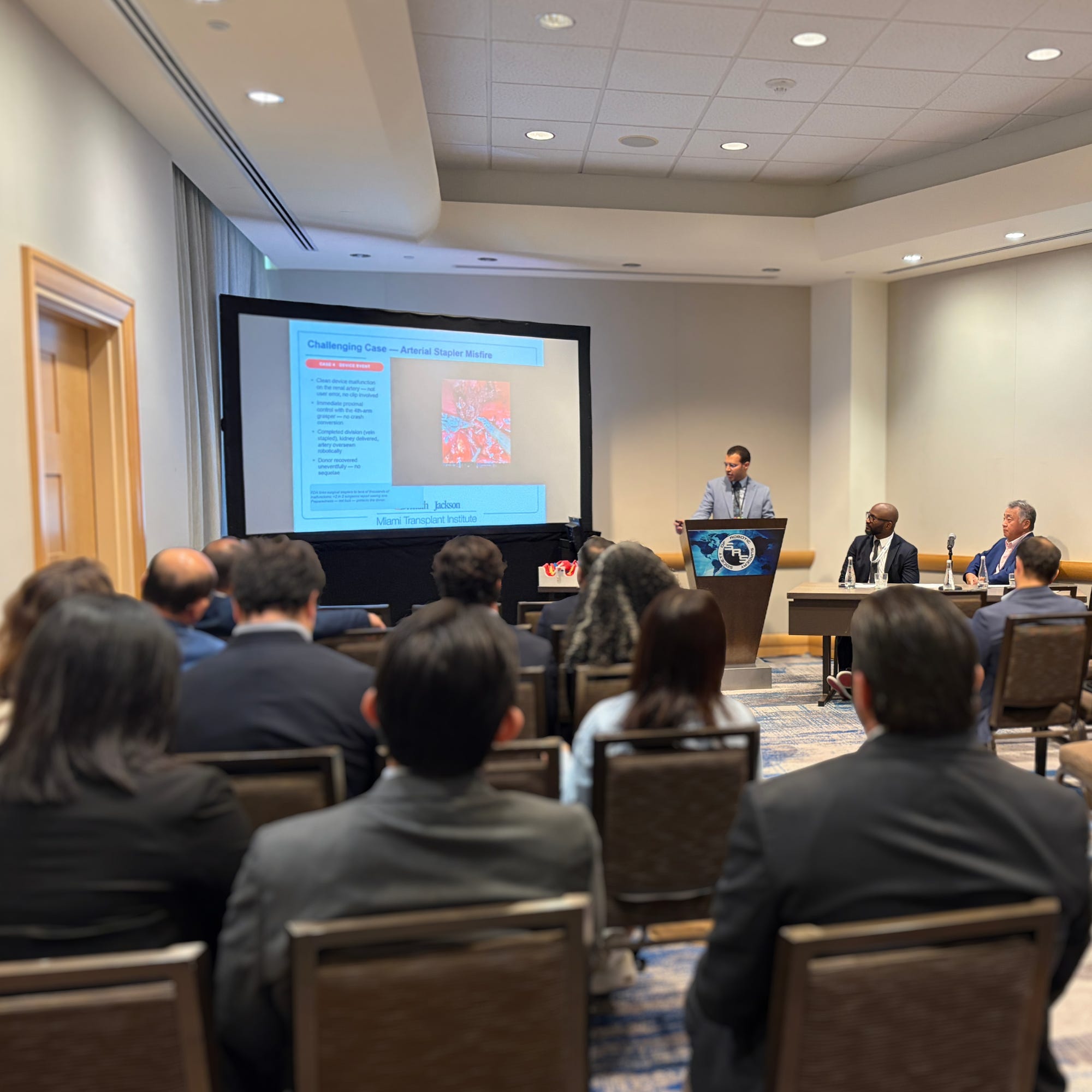
Watching the main hall fill to capacity as conference co-chairs Dr. Vipul Patel and Prof. Jacques Marescaux took the stage, you could feel the room pivot from technical curiosity to administrative reality. Marescaux, who executed the landmark transatlantic Lindbergh I operation over dedicated fiber cables decades ago, rightly framed today’s 5G capability as an absolute baseline rather than a miracle. The challenge in front of us is no longer proving that remote consoles work; it is forcing entrenched regulatory bodies to keep pace with clinical capability.
Dr. James Allen reinforced this during his session, outlining the brutal administrative and operational hurdles required for international cross-border deployment. If we cannot build standardized credentialing frameworks, cyber-defense protocols, and unified malpractice policies across jurisdictions, the most advanced 5G network in the world will remain trapped in regulatory gridlock. The bottleneck in telesurgery has officially migrated from engineering to policy.
Surgical Intelligence, Predictive AI, and Global Equity
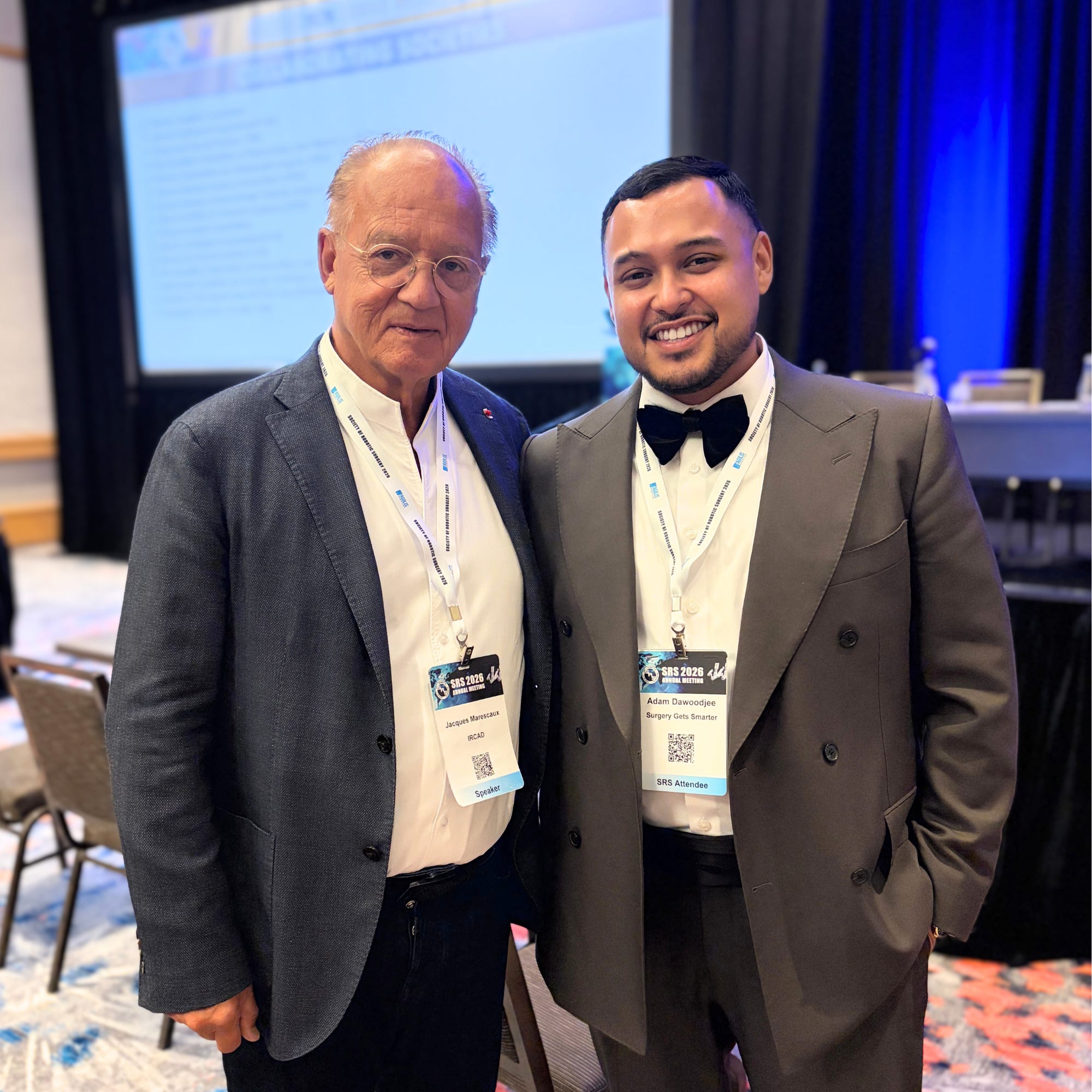
Standing alongside Jacques Marescaux after his presentation, my conversations confirmed that predictive surgical intelligence is rapidly replacing raw mechanical dexterity as the primary market differentiator. Prof. M Asif Chaudry detailed how visual operative artificial intelligence, like Omnitivity AI, actively assists surgeons through complex oncology resections by mapping tissue planes in real time. This is not about automated systems replacing human judgment, but about equipping the clinician with live, contextual decision support when navigating high-risk anatomy.
Dr. Dinesh Vyas pushed this perspective even further during our discussion on global access and trauma pedagogy. Vyas emphasized that elite visualization and AI simulation models must be intentionally designed to drive down severe complications in low-resource settings, rather than remaining locked inside high-budget academic hubs. When you pair low-resource trauma simulation with intelligent guidance, you democratize surgical precision across every tier of healthcare.
Modular Floor Hardware and the Path Forward
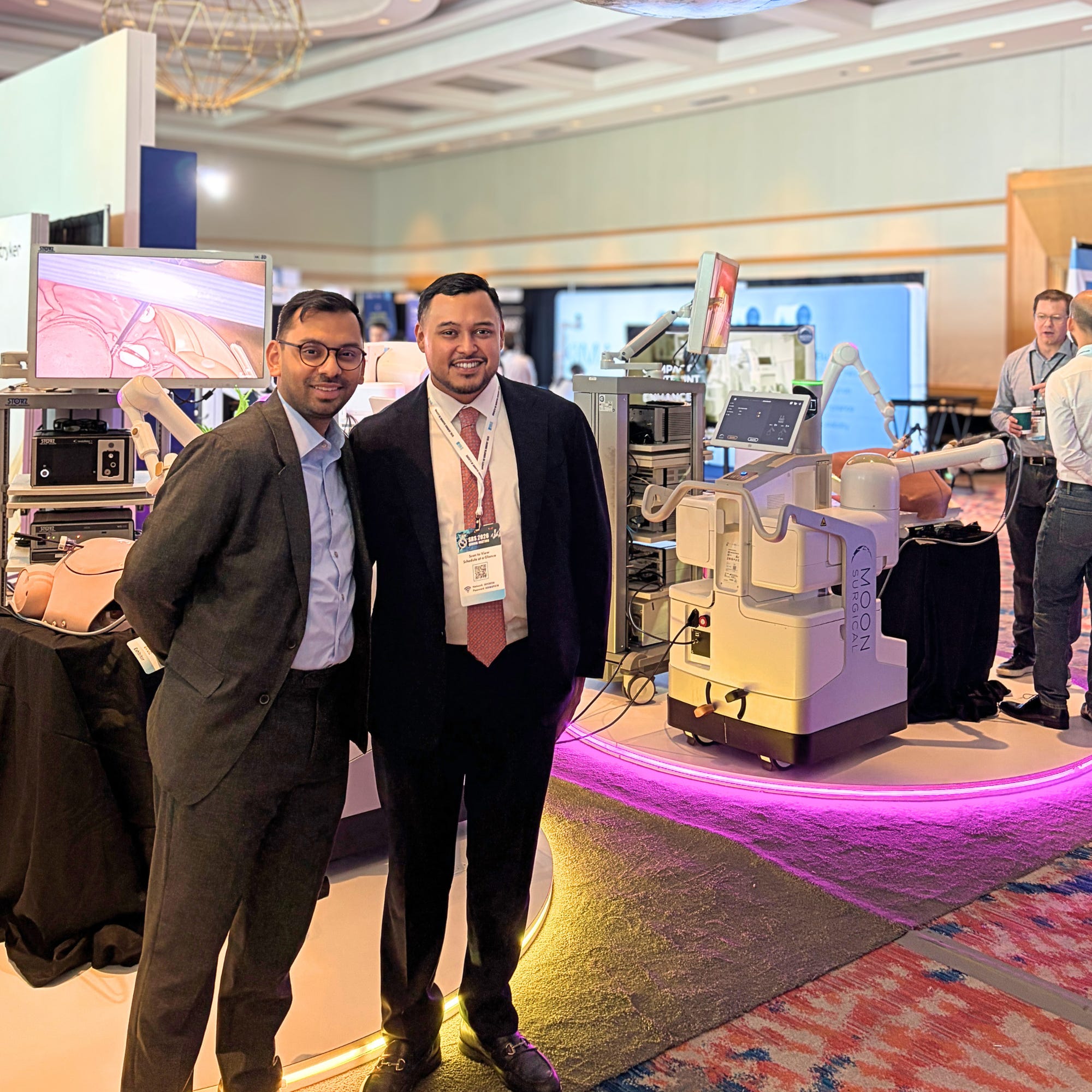
On the exhibition floor, the shift toward modular, accessible design was impossible to ignore. Catching up with Tushar Agarwal at Moon Surgical, we discussed how adaptive assistant platforms are streamlining daily operating room efficiency without forcing hospitals to dismantle their existing infrastructure. Coupled with Distalmotion’s hybrid setups built specifically for outpatient centers, EIZO’s glasses-free 3D displays, and EDDA Technology’s real-time AI organ mapping via its IQQA platform, the floor proved that modularity and intuitive spatial awareness are where value is actively being generated.
The ultimate takeaway from SRS 2026 is that the era of hardware worship is officially over. Operating across an ocean with zero perceptible lag is no longer a headline; it is the absolute minimum requirement to enter the room. Sub-50ms connectivity successfully eliminated distance as a physical barrier in the operating room. Now, our job is to destroy distance as an economic and structural barrier, ensuring that surgeons in underserved community clinics can tap into the exact same predictive intelligence and remote guidance as the world’s most elite medical centers.