


The Dawn of Four-Titan Competition
The soft-tissue surgical robotics space has officially transitioned out of a single-player monopoly into a mature, four-titan ecosystem. Rather than competing on incremental hardware features, the dominant MedTech powers are now locked in a battle defined by four completely distinct platform architectures.
This shift was cemented by two major 2026 milestones. First, Johnson & Johnson secured U.S. FDA market authorization for its Ottava robotic surgical system, marking the entry of a zero-footprint platform after an 11-year developmental journey. Second, Stryker entered the soft-tissue segment through a strategic alliance with CMR Surgical. Stryker made a $400M preferred equity investment in CMR, secured exclusive U.S. commercial distribution rights for the Versius portfolio, obtained an option for a full acquisition in the future, and placed Medsurg Group President Andy Pierce on CMR’s board of directors.
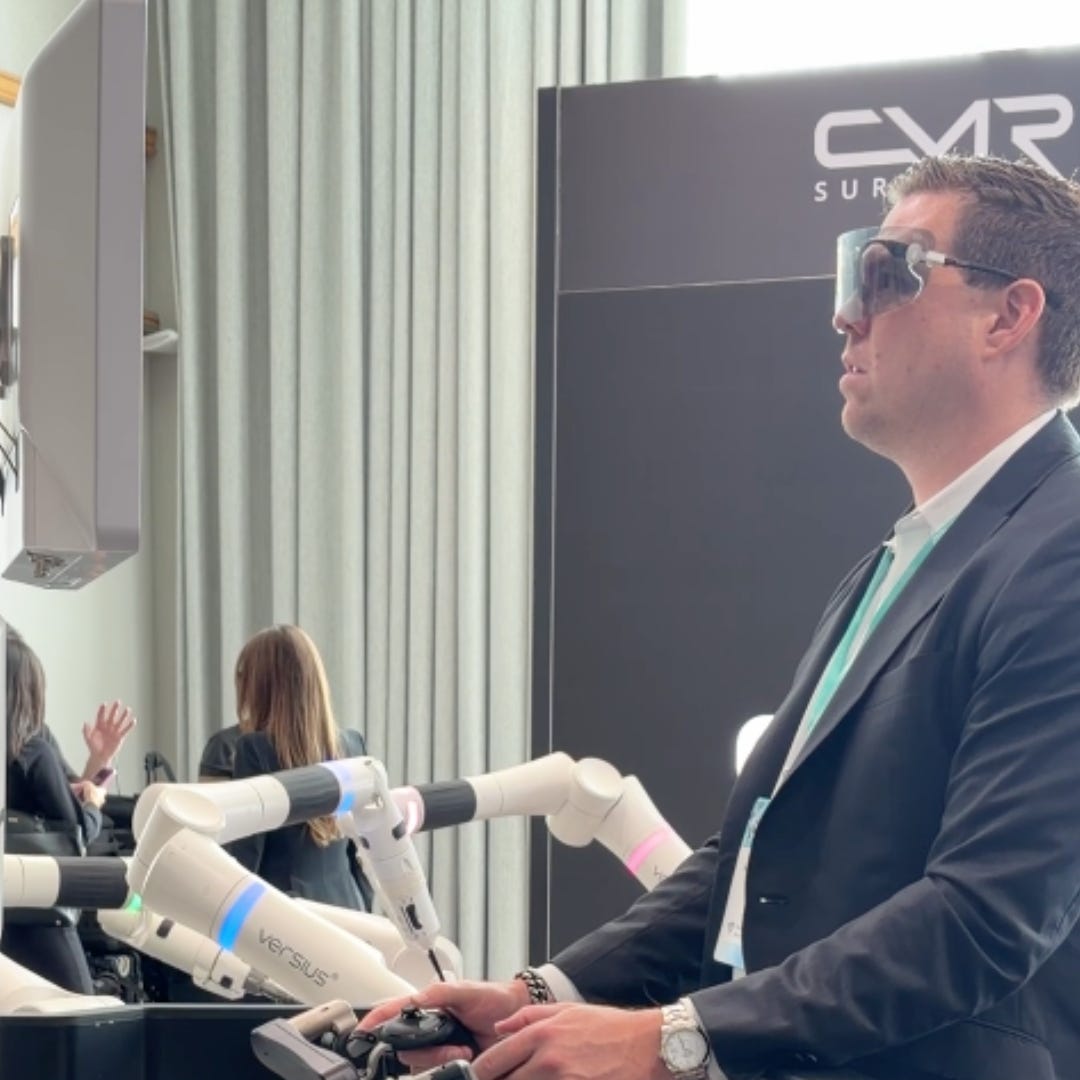
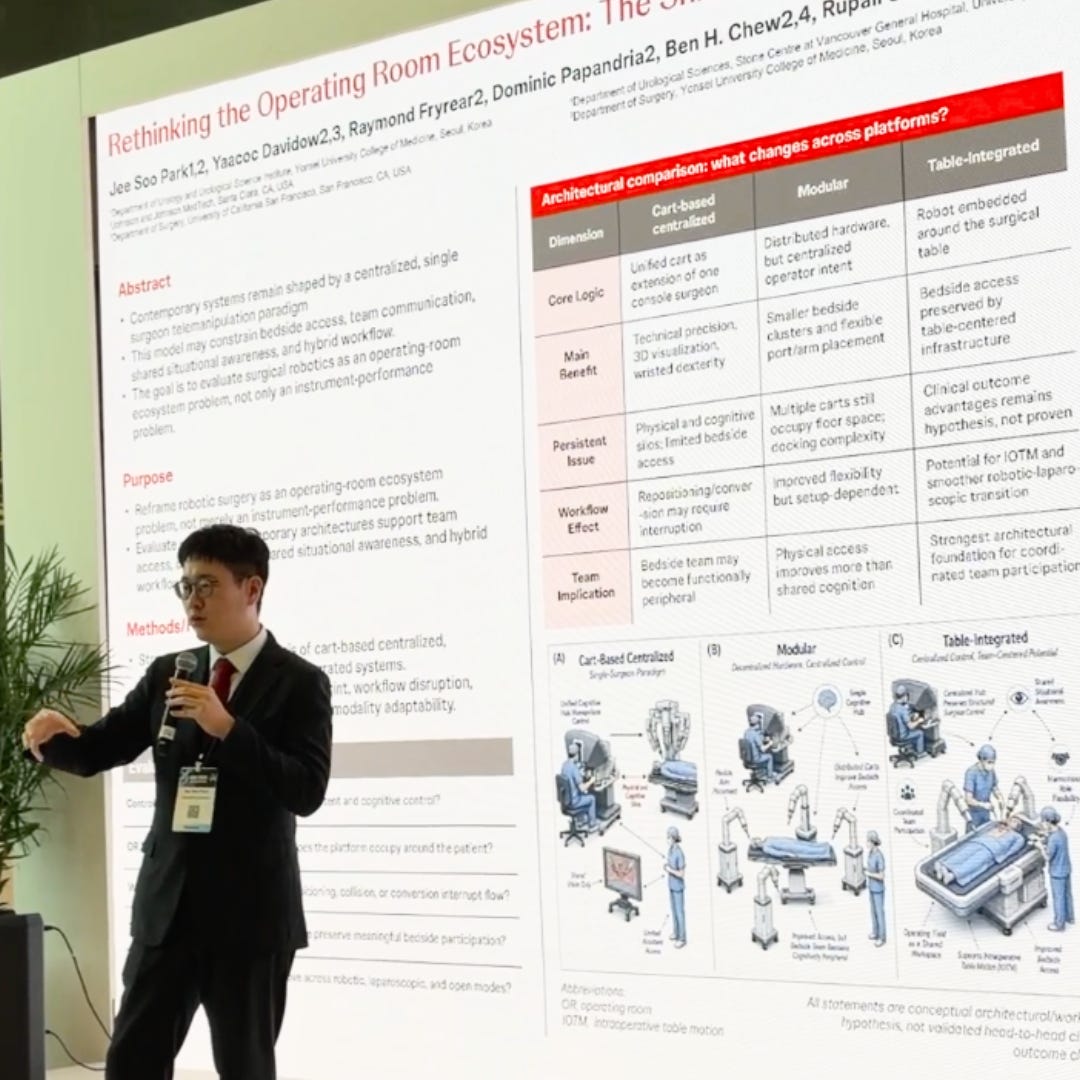
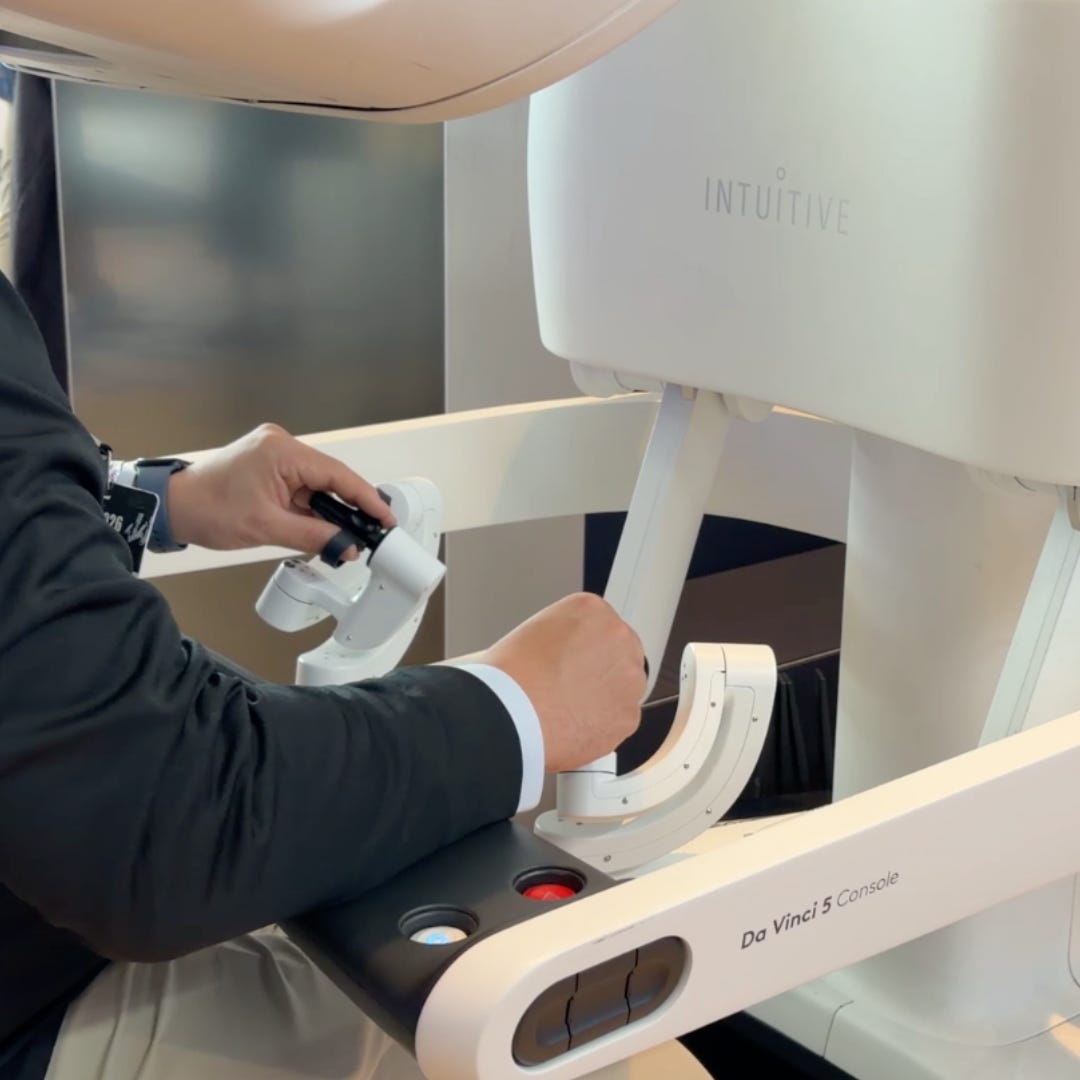
Together alongside Intuitive and Medtronic, these platforms form the four pillars of the modern surgical robotics market. Intuitive continues to protect its core main operating room footprint with the da Vinci 5 while expanding its lumen-navigation reach via Ion. Johnson & Johnson introduces a zero-footprint architecture with Ottava, integrating four robotic arms directly into the operating table structure so that the arms remain completely stowed and invisible when not in use. Medtronic is executing a dual-track strategy by pairing the modular flexibility of Hugo with Cornerstone’s traditional boom architecture to address surgical teams demanding closed, immersive consoles. Meanwhile, Stryker is capturing outpatient and ambulatory surgery volume by pairing CMR’s small-footprint Versius platform directly with its native 1788 4K visualization tower and connected OR hub ecosystem.
Venue-Specific Integration Over Standalone Consoles
The core lesson of this market evolution is that victory no longer belongs to standalone hardware consoles fighting for every procedure in a central operating room. Instead, growth depends on venue-specific platform integration.
Stryker’s deployment of CMR’s Versius platform targets Ambulatory Surgery Centers and outpatient suites where physical space and sterile processing capabilities are constrained. Versius utilizes bedside modules that pass through standard doorways and elevators without facility modifications. Furthermore, its instruments use standard steam autoclaving rather than requiring specialized low-temperature sterilization units, removing major capital hurdles for outpatient sterile processing departments.
Concurrently, Johnson & Johnson’s Ottava addresses operating room floor clutter by eliminating standalone carts entirely. By building the robotics into the table, the system preserves physical space for surgical staff while maintaining native compatibility with J&J’s extensive instrumentation and stapling lines.
Beyond the Laparoscope: The Next Frontier
While multi-port abdominal procedures generate the highest capital revenue today, procedural expansion is moving rapidly into natural lumen navigation and digital automation.
Over the coming decade, robotic platforms entering the GI suite will capture a significant share of procedures historically performed through open or laparoscopic approaches. At the same time, platforms are beginning to leverage intraoperative digital data to automate repetitive procedural tasks, such as tissue tracking and suturing assistance. As energy-based non-invasive modalities like Histotripsy mature alongside endovascular and endocardiac robotics, the operational footprint of robotic care will extend well beyond the traditional surgical port.
Operational Solutions for Workforce Realignment
The diversification of robotic platforms directly addresses shifting clinical workforce dynamics. Academic medical centers face the challenge of training surgical residents across open, laparoscopic, and robotic console techniques simultaneously.
In community, rural, and outpatient environments, robotic platforms offer a practical answer to acute surgical assistant shortages. By granting the primary surgeon direct, autonomous control over visualization and retraction, multi-arm platforms allow complex procedures to be completed safely with fewer bedside staff.
The Economics of Architectural Specialization
As soft-tissue robotic penetration scales beyond its current 8% baseline, the battle lines are clear. The legacy strategy of selling a single, multi-million-dollar multi-port console to every surgical department is officially obsolete.
By grounding their platforms in specific clinical venues, operating room workflows, and digital ecosystems, Intuitive, J&J, Medtronic, and Stryker have redefined what it means to win in surgical MedTech. Hardware is no longer the sole differentiator; integration is. In this new quadropoly, market share won’t simply go to the system with the sharpest vision or the most articulate wrist, but to the platform that integrates seamlessly into the physical and financial reality of the room it inhabits.
Learn More & Resources
To dive deeper into the latest FDA clearances, strategic alliances, and commercialization trajectories reshaping soft-tissue surgical robotics, explore the source coverage online:
Read the official press release on Johnson & Johnson receiving U.S. FDA market authorization for the OTTAVA™ system via the J&J Media Center.
Read the strategic partnership announcement between Stryker and CMR Surgical on the Stryker Newsroom.
Watch Bloomberg Television’s feature on J&J’s market entry and OTTAVA™ validation on YouTube.
Review CNBC’s analysis of J&J’s robotics strategy on CNBC Investing Club.
References
Johnson & Johnson. Johnson & Johnson Receives FDA Market Authorization in the U.S. for its OTTAVA™ Robotic Surgical System. Johnson & Johnson Media Center, July 22, 2026.
Stryker. Stryker and CMR Surgical announce strategic alliance to advance robotic-assisted surgery. Stryker Newsroom, October 12, 2026.
Bloomberg Television. J&J’s Billion-Dollar Robot Bet. YouTube, August 2, 2026.
Abellard, N. Meet Ottava, J&J’s surgical robot leading the healthcare giant into a lucrative new market. CNBC, September 11, 2026.
Competing by venue makes sense for ASCs. Space and sterile processing decide what fits before price ever comes up, so a smaller footprint can carry more weight there than a feature list.