

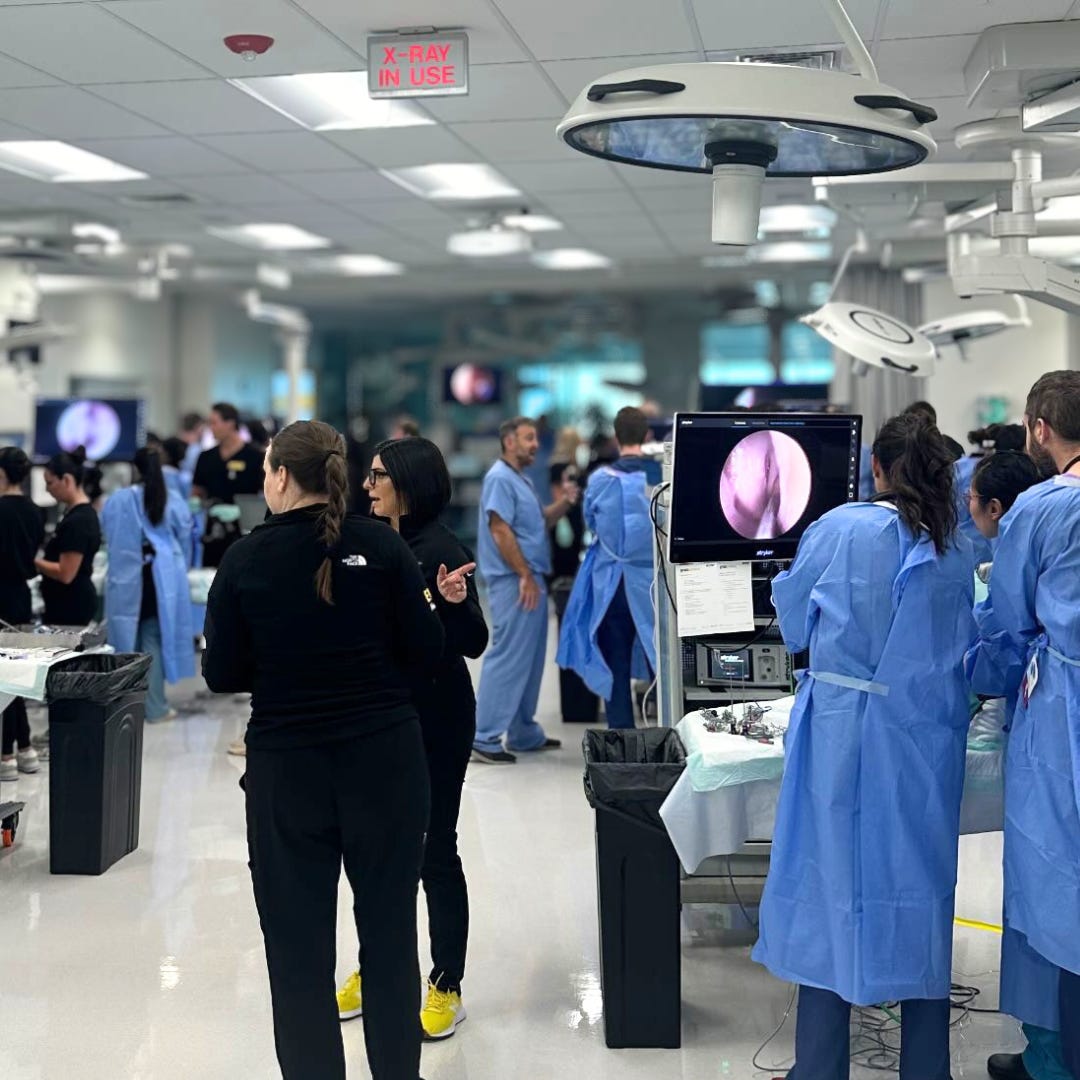
Within the University of Utah Anatomy Lab, the 14th Annual Head and Neck Dissection Course brought together residents and faculty for a three-day cadaver-based training session spanning rhinology, head and neck oncology, and facial plastic surgery. The course reflects a broader shift in surgical education toward integrated training models that combine multiple subspecialties while maintaining a focus on anatomical precision and technical discipline.
Now in its fourteenth year, the course has become a consistent platform for hands-on surgical instruction. Its structure alternates between focused lectures and extended dissection sessions, placing knowledge and execution in close sequence. This format reinforces the transition from anatomical understanding to operative technique.
The first day focused on rhinology and skull base surgery, with emphasis on endoscopic approaches in confined anatomical spaces. Under the guidance of Dr. Jeremiah Alt, Division Chief for Rhinology, participants progressed from sinus anatomy to more advanced approaches involving the pterygopalatine fossa and skull base. Repetition across procedures such as septoplasty and sinusotomy supported the development of spatial awareness and controlled instrument use.
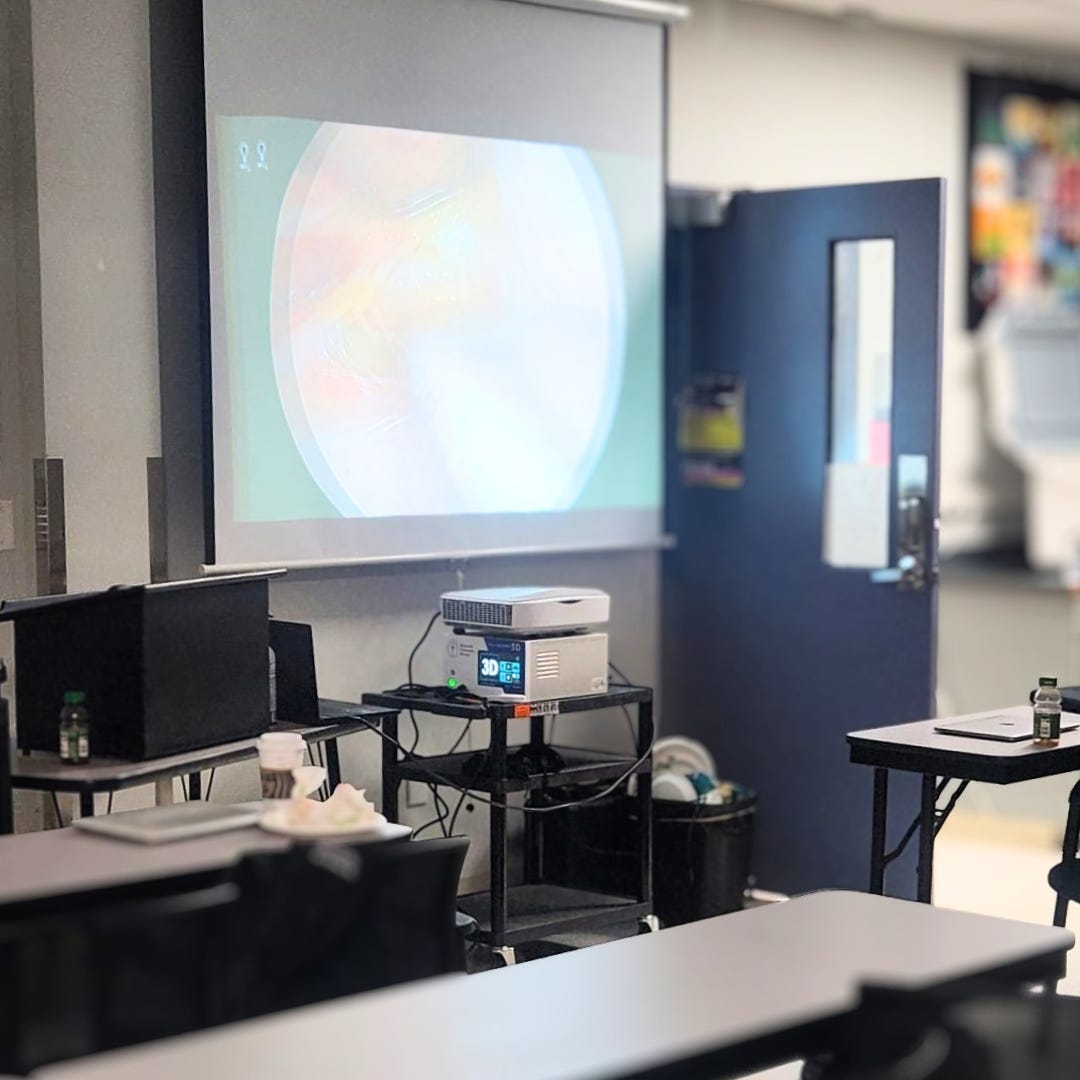
A portion of the session incorporated the AED ENDOPRO® 3D visualization system in both didactic and dissection formats. Introduced during lecture and subsequently applied during endoscopic work, the system provided depth-enhanced visualization of sinonasal and skull base anatomy, reinforcing spatial orientation within confined operative corridors.
The second day shifted to head and neck surgery, where the focus expanded to include oncologic resection and reconstruction. Dissections included laryngectomy, mandibulectomy, and neck dissection, alongside discussions of advanced cancer management led by guest faculty such as Brittany Barber. Full-body cadaver work for flap harvest highlighted the importance of reconstructive planning and the integration of ablative and reconstructive techniques.
The final day centered on facial plastic and reconstructive surgery. Under the direction of faculty including Sarah Akkina, sessions covered rhinoplasty, facial aging procedures, and trauma reconstruction. These exercises emphasized precision, symmetry, and the balance between functional and aesthetic outcomes. A temporal bone practicum further reinforced the role of microsurgical technique within broader surgical training.
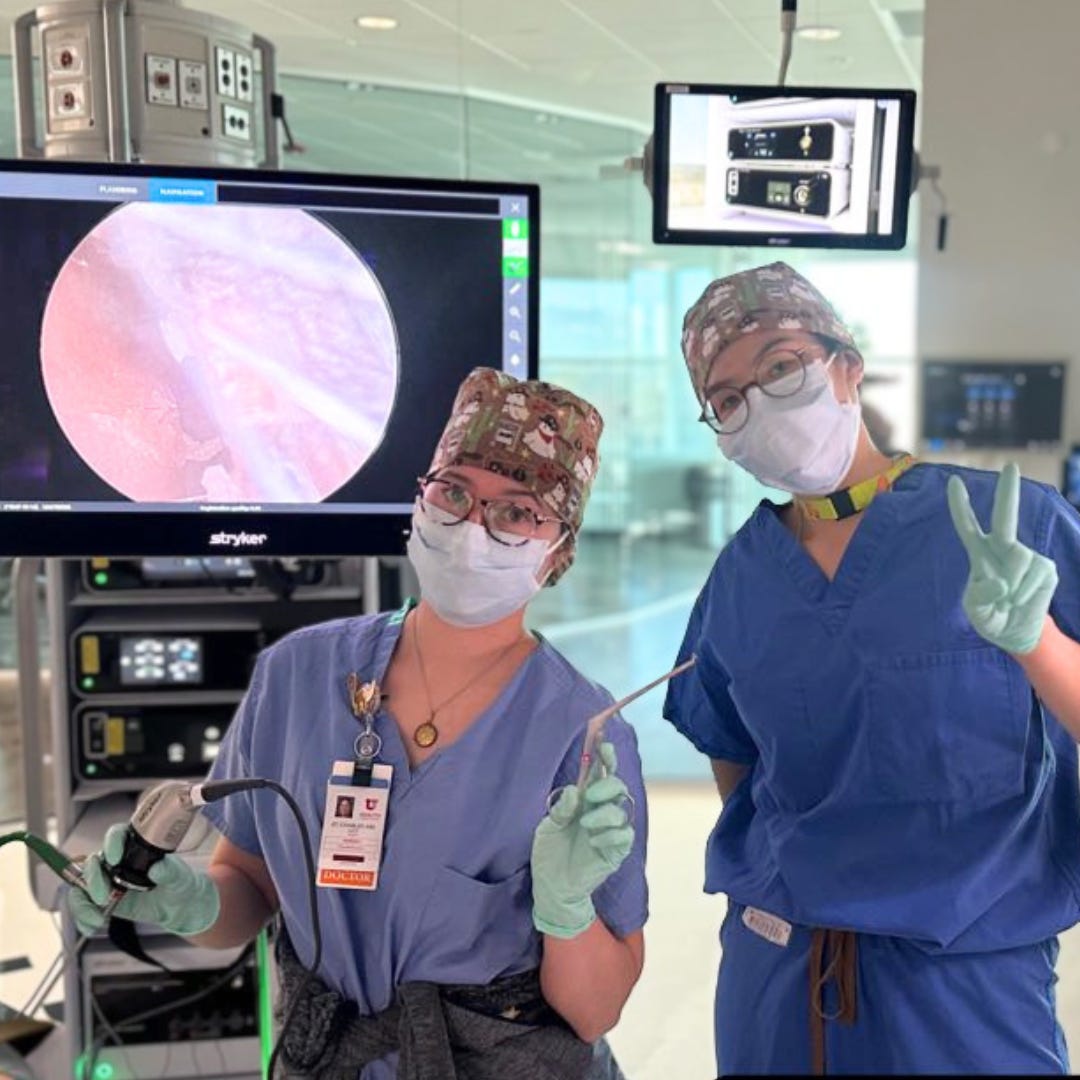
Across all three days, the course maintained a consistent pattern of short lectures followed by hands-on dissection. This approach allows participants to apply concepts immediately and refine technique through repetition. Cadaveric specimens provide a setting where procedures can be performed and repeated while accounting for anatomical variation.
While the course incorporates evolving techniques and reconstructive strategies, these are presented within a framework grounded in anatomy, mentorship, and practice. New approaches are introduced as extensions of established principles rather than replacements.
The University of Utah course demonstrates how surgical training continues to adapt. By combining multiple subspecialties into a single program, it reflects an approach that values both depth and range, with technical skill, anatomical knowledge, and surgical judgment developed together.